
The Ripple Effect of Conservation
How Community-Led Action Is Changing Lives and Protecting Wildlife
Conservation is often spoken about in terms of numbers - hectares protected, litres of water pumped, animals saved. But on the ground, conservation is deeply human. It is a mother drawing clean water from a borehole for the first time. A child receiving a school meal. A scout setting out at dawn to track rhino. A community discovering that wildlife is not a threat, but a future.
Through our partnership with Imvelo Safari Lodges and the Community Rhino Conservation Initiative, Banovich Wildscapes Foundation supports a model of conservation that begins with people. Because when communities thrive, wildlife has a chance to survive.
And the ripple effect is extraordinary.
Protecting Habitat, Sustaining Life
Across Zimbabwe’s wild places:
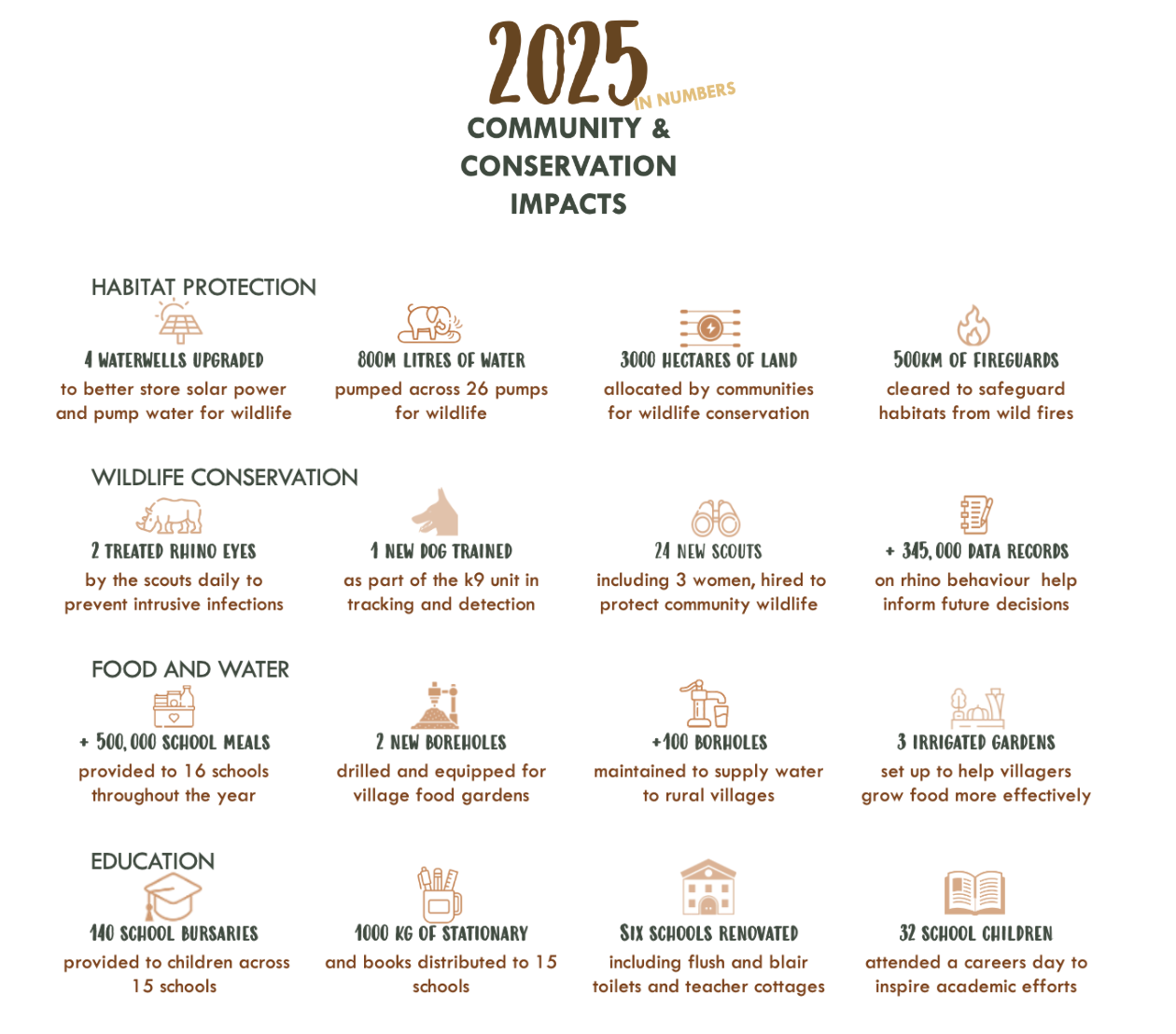
4 water wells have been upgraded to solar power, delivering clean water for wildlife.
800 million litres of water are pumped annually across 26 pumps for animals.
3,000 hectares of land are protected by communities for wildlife conservation.
500 km of firebreaks safeguard habitats from devastating wildfires.
These are not abstract achievements. They are lifelines in landscapes where water, fire, and human-wildlife conflict determine survival.
On the Frontline of Wildlife Conservation
Real conservation happens on foot, in heat and dust, through vigilance and courage:
Two treated rhino eyes—small interventions that prevent infection and preserve sight.
One new K9 dog trained, strengthening tracking and detection units.
24 new wildlife scouts, including three women, now employed to protect their own lands.
345,000 data records collected on rhino behaviour to guide future conservation decisions.
These scouts are not outsiders. They are community members protecting what is theirs.
Food, Water & Dignity
Conservation that ignores hunger will never last.
500,000 school meals provided across 16 schools.
Two new boreholes drilled for village food gardens.
Over 100 boreholes maintained for rural water supply.
Three irrigated gardens established to improve food security.
Food security changes everything. It builds resilience. It restores dignity. It creates choice.
Education: Planting the Seeds of Tomorrow
140 school bursaries awarded to children across 15 schools.
1,000 kg of stationery and books distributed.
Six schools renovated, including flush toilets, Blair systems, and teacher housing.
32 children attended a careers day—many for the first time imagining a future beyond survival.
Conservation is not only about protecting animals—it is about expanding possibility.
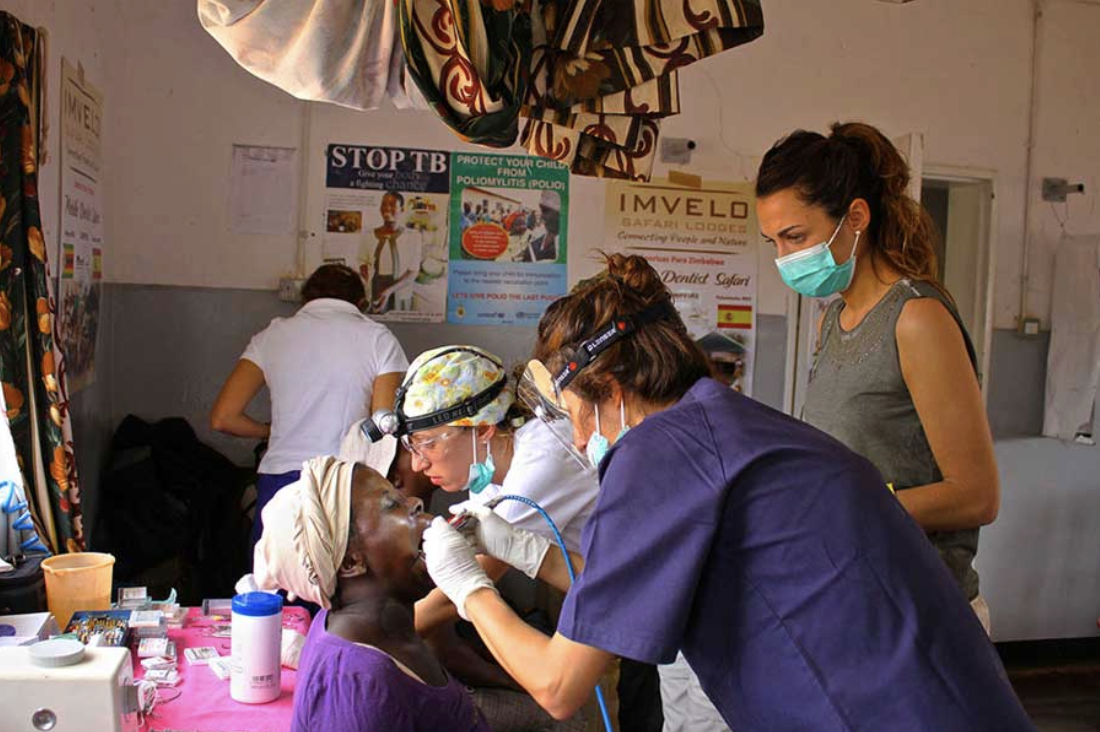
Imvelo started building the Ngamo Clinic, with the generous support of donors.
Health & Wellbeing
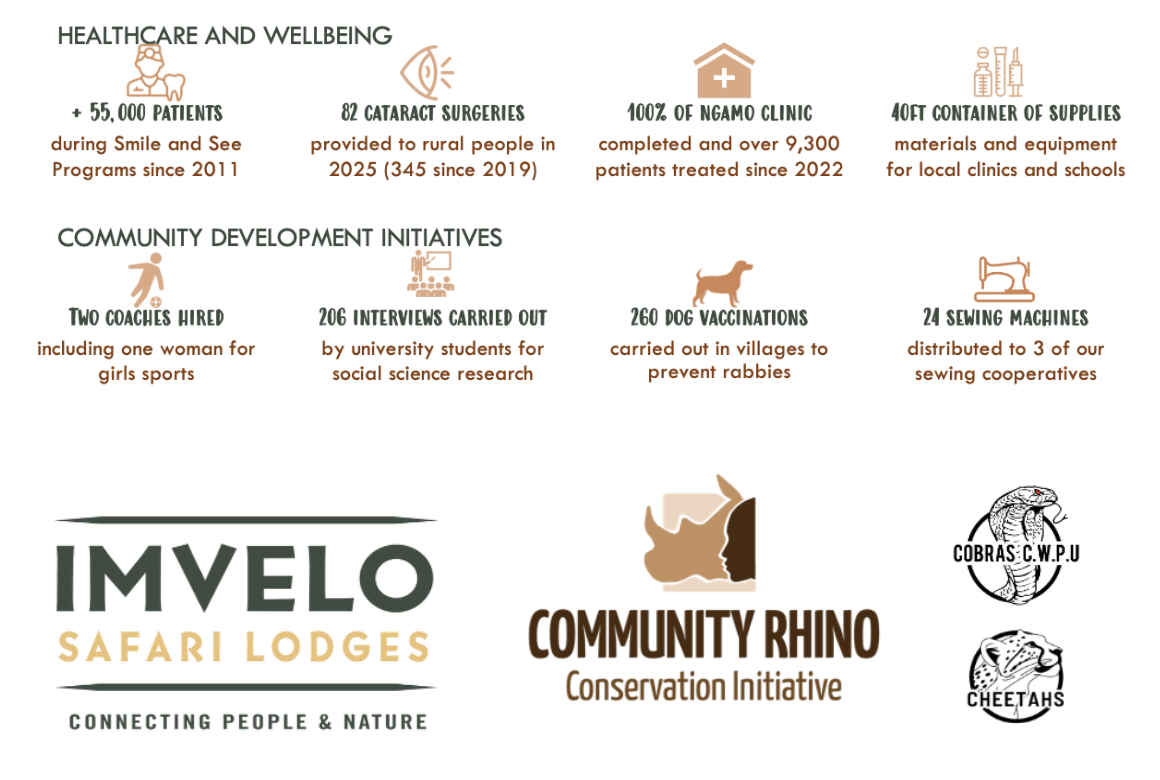
55,000 patients treated through Smile & See programmes since 2011.
82 cataract surgeries performed in 2025 alone.
A fully operational clinic serving over 9,300 patients since 2022.
A 40-foot container of medical supplies delivered to local clinics and schools.
Good health enables participation. It turns communities from recipients into partners.
Community-Led Development
Two coaches hired, including a woman leading girls’ sports.
206 university interviews conducted for social research.
260 dog vaccinations preventing rabies.
24 sewing machines empowering cooperative enterprises.
These are not charity handouts. They are investments in independence.
Why This Matters
At Banovich Wildscapes Foundation, we believe conservation is not about fencing people out, it is about bringing people in.
Every borehole, every bursary, every scout hired strengthens the bond between community and wilderness. It shifts conservation from something done to people into something built with them.
When a village benefits from wildlife, that wildlife gains guardians.
When a child eats, learns, and dreams, a future protector is born.
When communities lead, conservation lasts.
This is how the wild endures.
This is how hope becomes action.
This is the ripple effect of conservation.
Leave each place better than you found it.
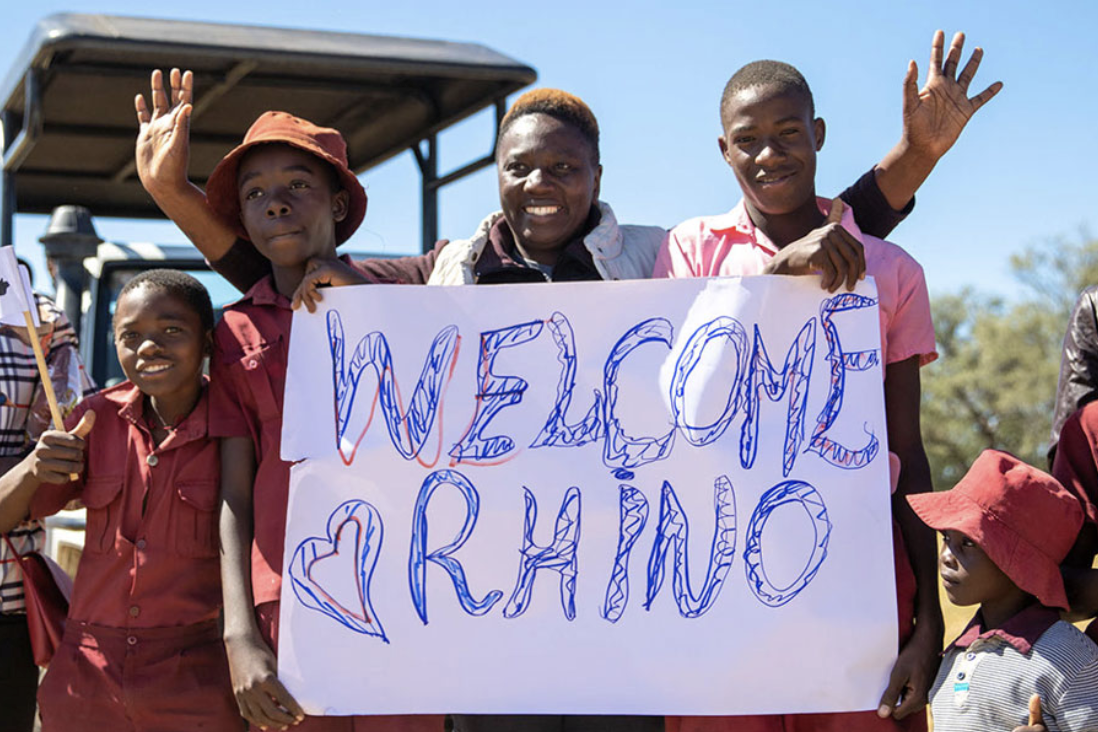
Community Rhino Conservation Initiative, with local people actively spearheading a conservation initiative while also directly benefiting from it.
