
Craig: The Last of the Great Tuskers
A Gentleman of the Amboseli Plains
There are elephants, and then there are legends. Craig was one of the latter.
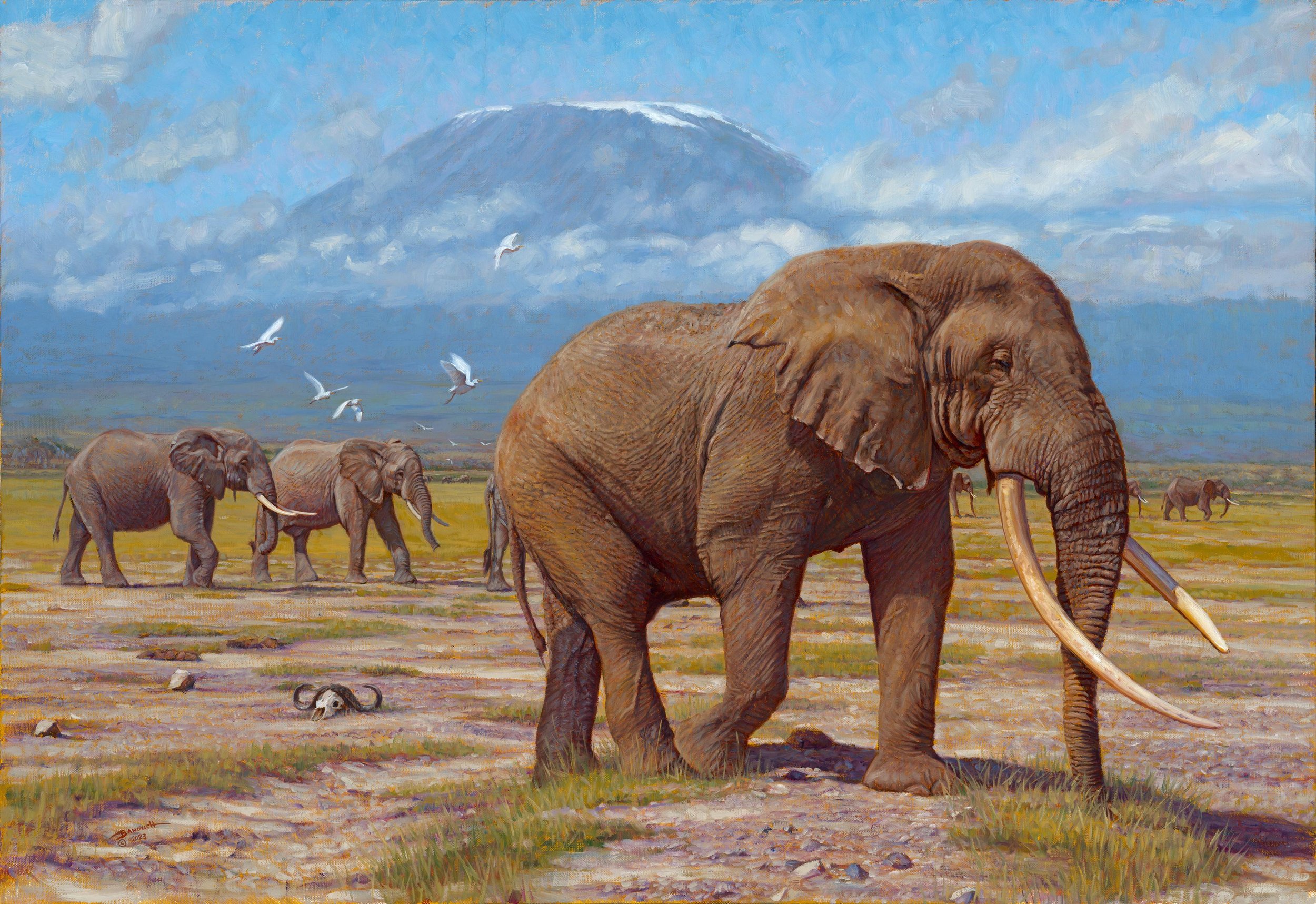
“Kibo”, oil on Belgian linen by John Banovich.
A true super tusker, a title reserved for only a handful of elephants left on Earth, Craig carried tusks so vast they brushed the ground as he walked. Each one weighed more than most humans. But it was not only his size that made him extraordinary. It was his presence. His calm authority. The way the world seemed to soften around him.
The first time I met Craig was around eleven or twelve years ago, when I travelled to Amboseli. I had gone there to research a very specific group of elephants, drawn by their unique anatomy and presence. My guide at the time was not particularly inspired, but we spent long days driving across wide, open plains, watching elephants move beneath clear skies.
Then I saw him.
At a distance, crossing in front of Mount Kilimanjaro, was an elephant unlike any I had ever seen. He carried himself with quiet authority. His silhouette against the yellow grasses and the great mountain beyond felt almost biblical. That elephant was Craig.
Craig was easily identifiable. He had a distinctive tear in his right ear, about halfway up, and his left tusk was slightly shorter than the right. After his passing, those tusks were measured at 125 pounds on the left and 145 pounds on the right. Monumental in any era, but almost unimaginable in modern East Africa.
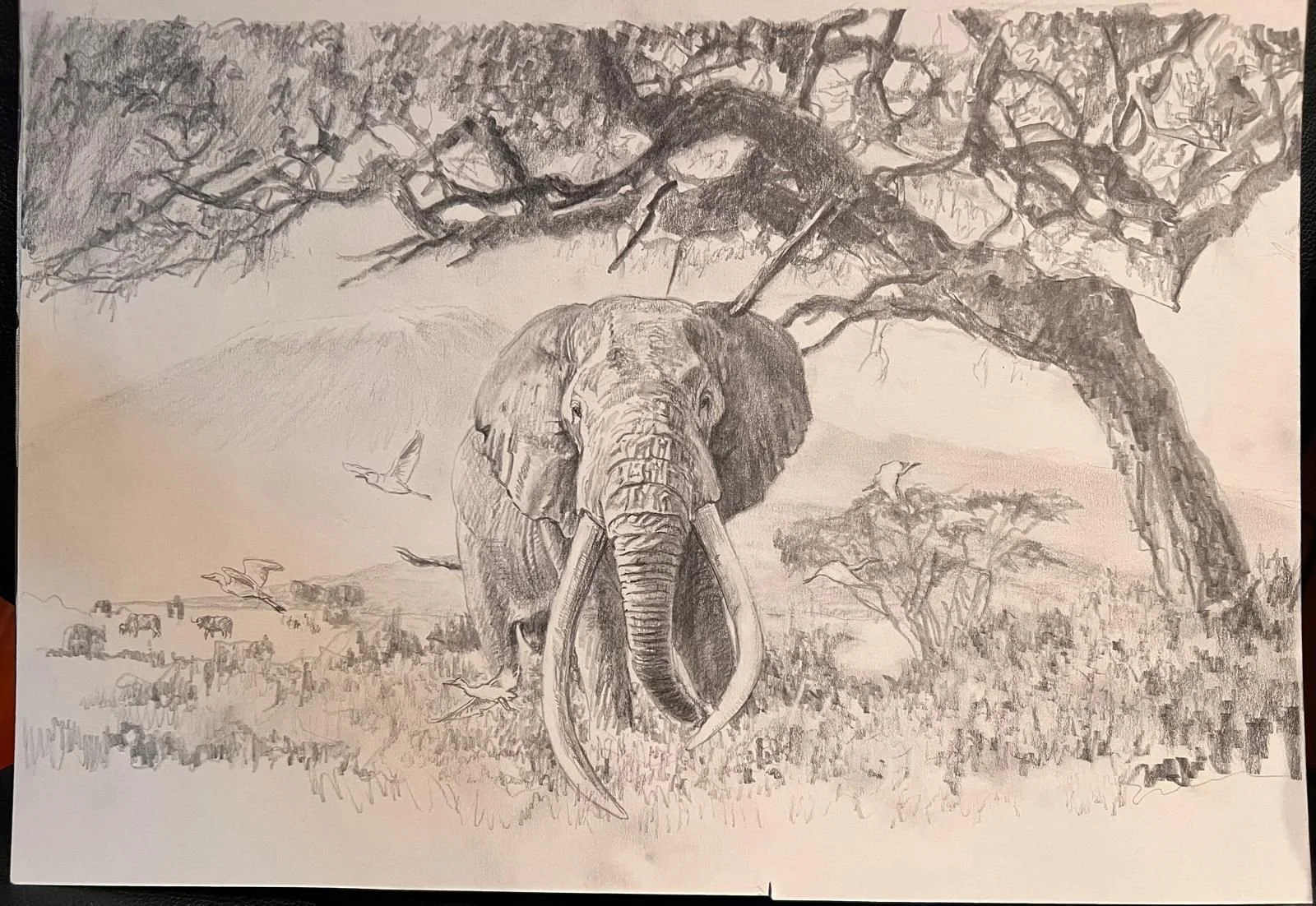
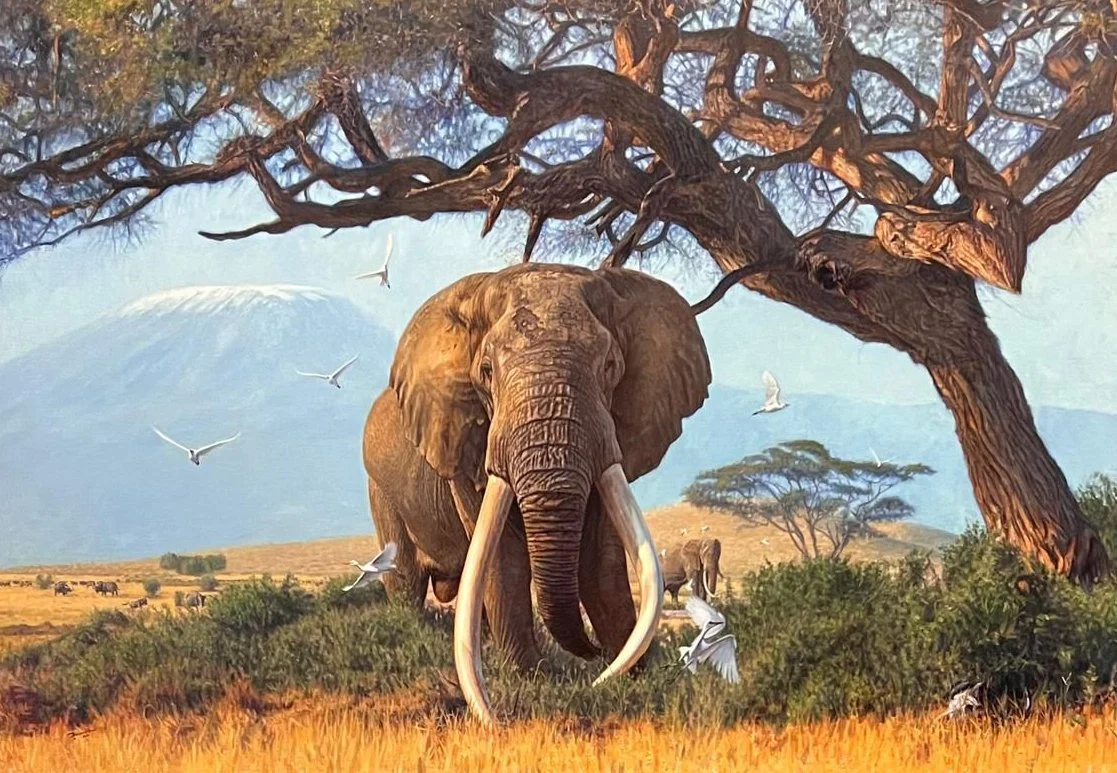
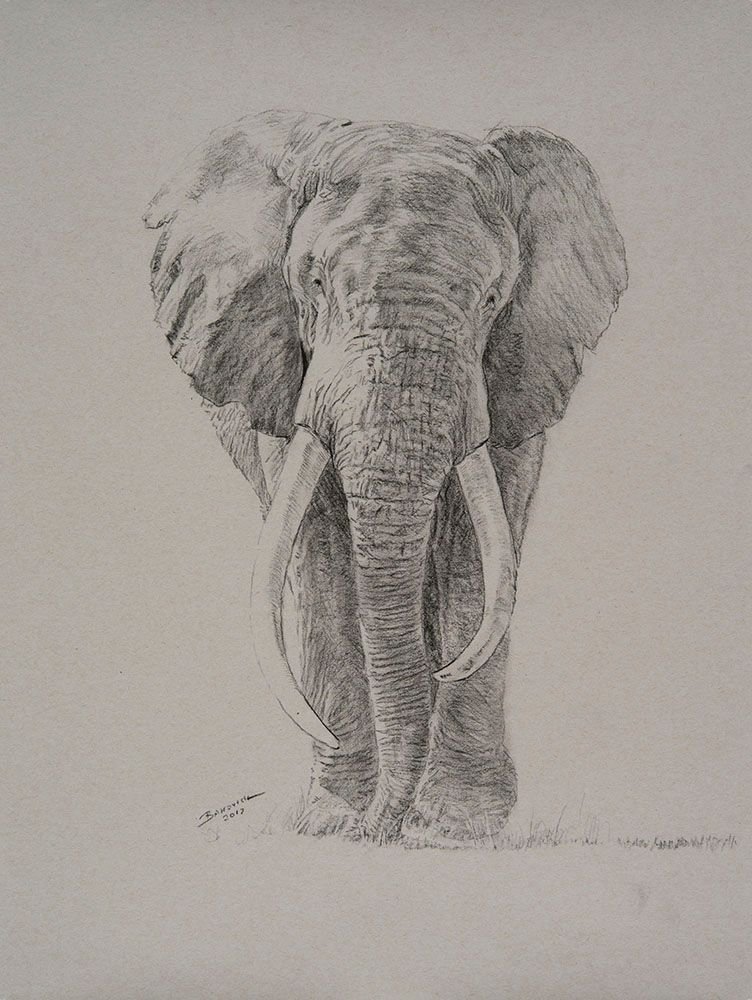
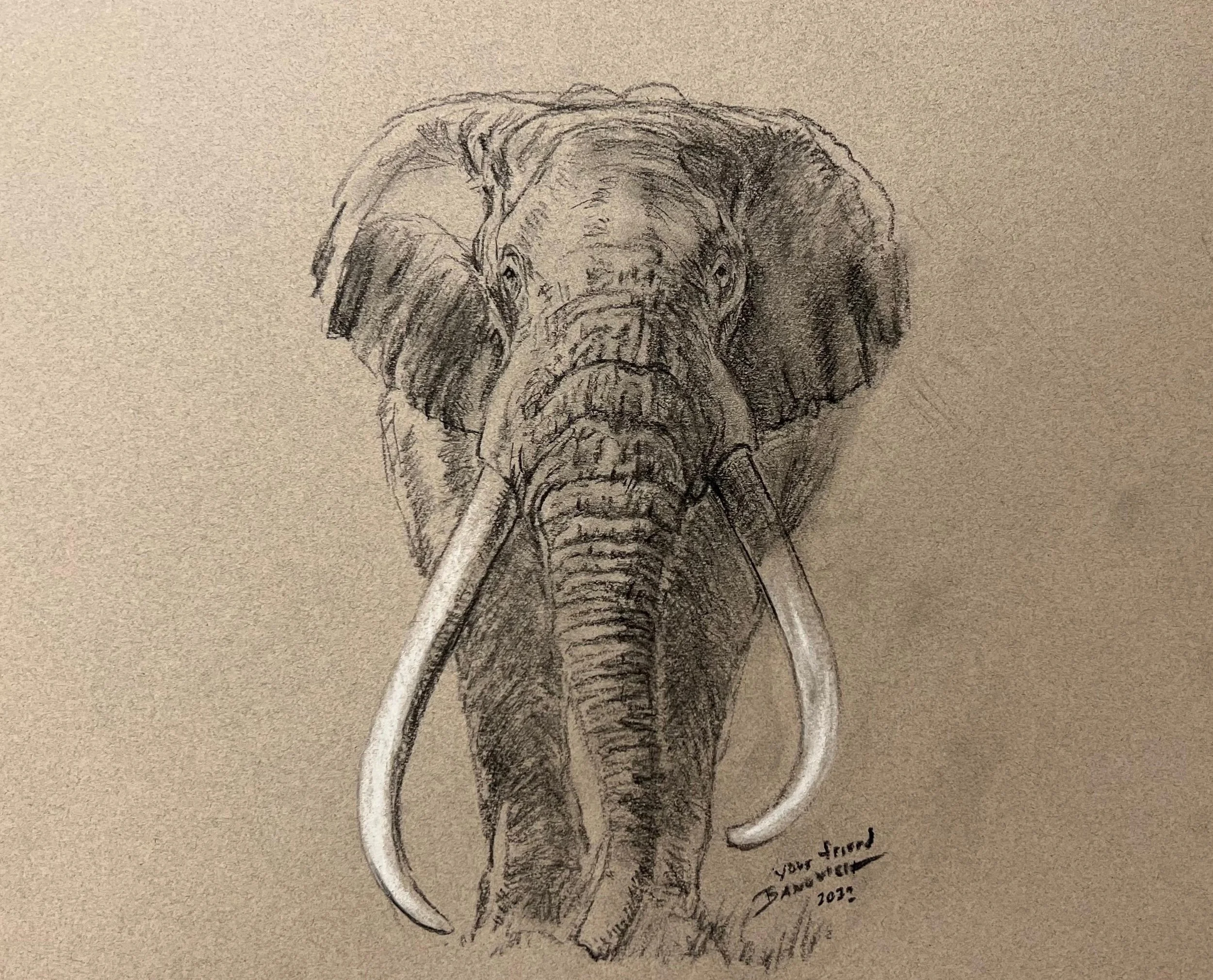
“Craig: Remembering a Legend”, original sketch and oil on Belgian linen by John Banovich.
In those early years, Craig was in his early forties. I created several paintings inspired by him. One focused on his head and shoulders. Another placed him in front of Kilimanjaro, crossing the plains. One of those works was later acquired by Johnny and Alexa Chilton. Even then, Craig stood apart. He was already becoming legend.
For decades, Craig roamed the wild landscapes beneath Mount Kilimanjaro, moving between Kenya and Tanzania, along ancient migratory routes etched into the land long before borders existed. Guides spoke of him in hushed tones. Rangers tracked him with devotion. Guests who were lucky enough to encounter him carried that moment for life.
He was not just an elephant.
He was a reminder of what Africa once held in abundance and what now hangs in the balance.
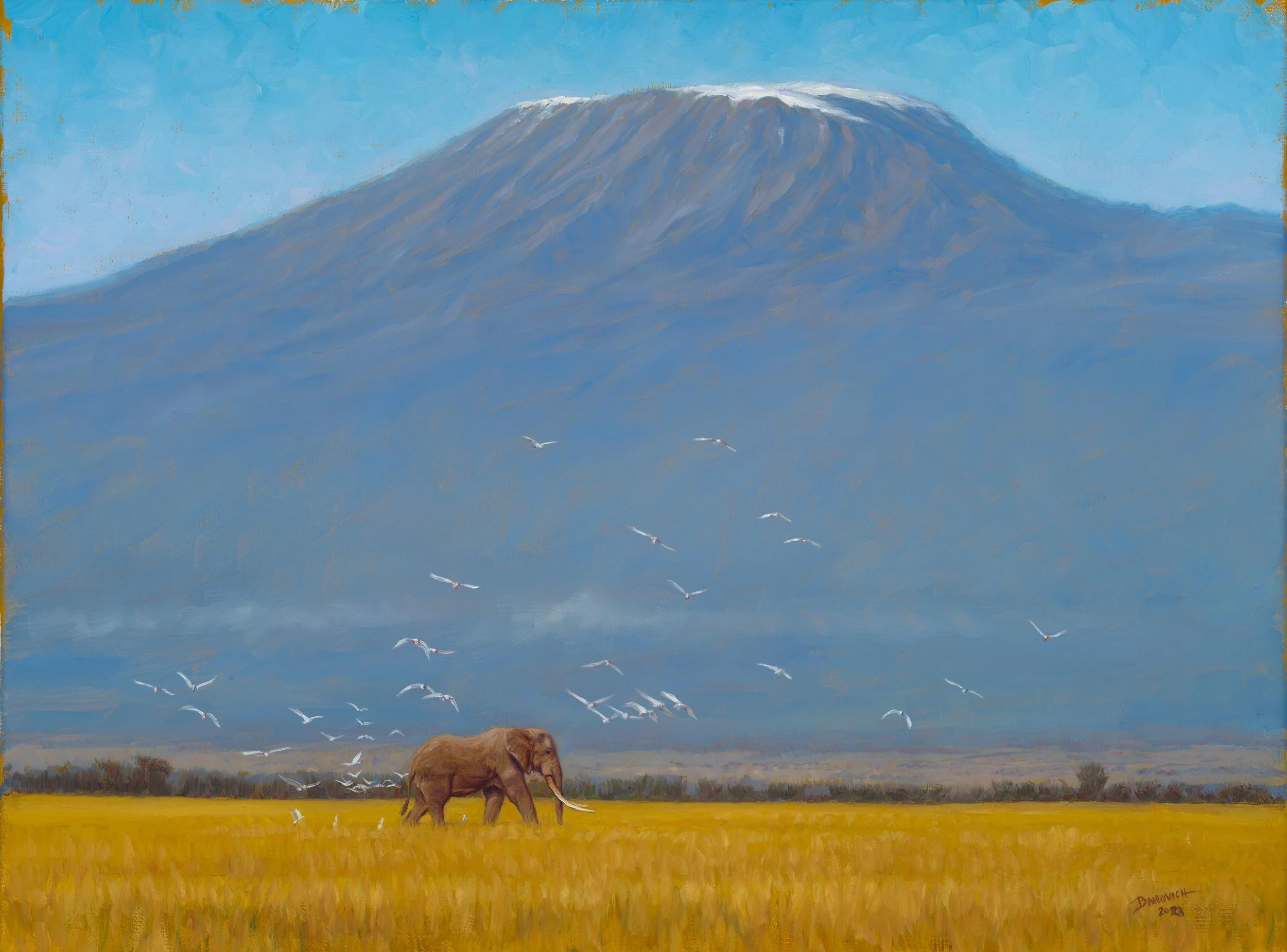
Under the Roof of Africa”, oil on Belgian linen by John Banovich.
Super tuskers like Craig are exceedingly rare. Their massive ivory, a genetic marvel, once ensured survival. Today, it marks them as targets. To reach old age in this era is almost unheard of. Craig did. Protected by dedicated conservation teams and the reverence of those who understood his significance, he lived long, walked freely, and became a living symbol of what conservation can achieve when it is rooted in respect.
Years later, I was commissioned to create a large painting for the entryway of a wonderful couple. To do it properly, I needed to spend time with Craig again. This time, he was older, his tusks even more impressive.
Finding him was not easy.
We searched for days inside the park with no success. Eventually, we heard he had moved beyond the park boundaries. We drove into a nearby village and met a Maasai man who knew him well. He climbed into our vehicle and guided us through thick bush.
We turned a corner and there he was.
Craig stood before us in all his glory.
I could see signs of age, but he was still strong. Still healthy. Still wholly himself. He showed no concern at our presence. He was calm. Grounded. Entirely at ease.
That was Craig.
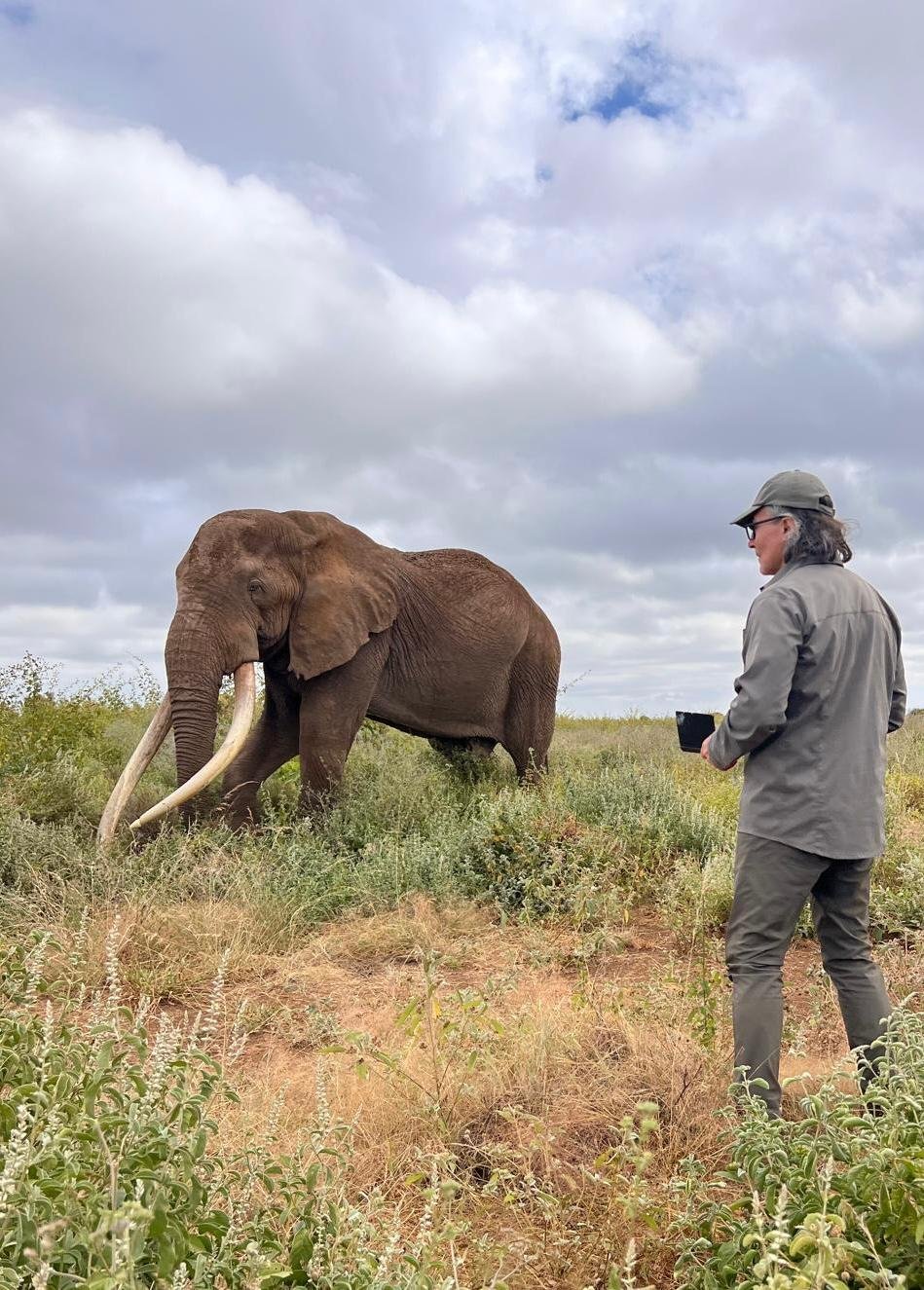
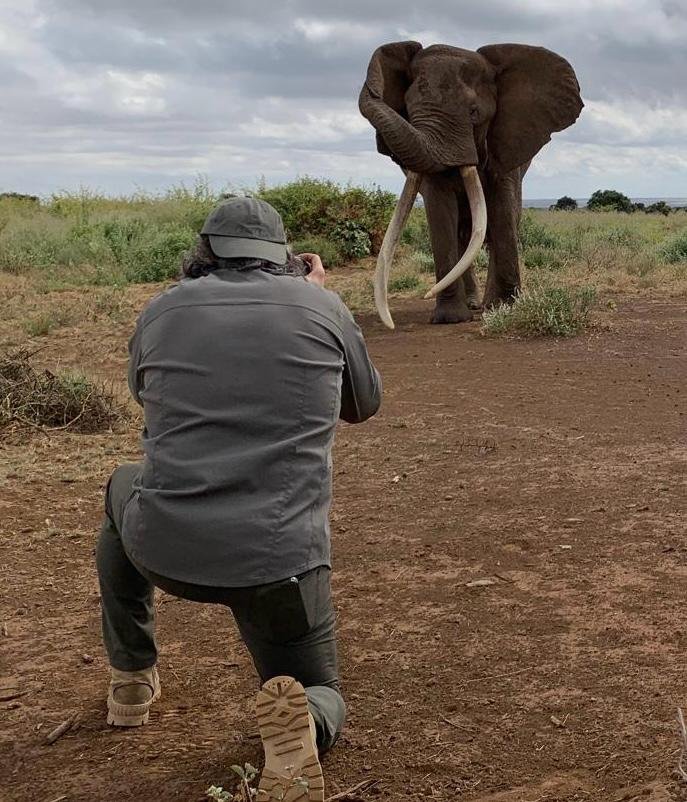
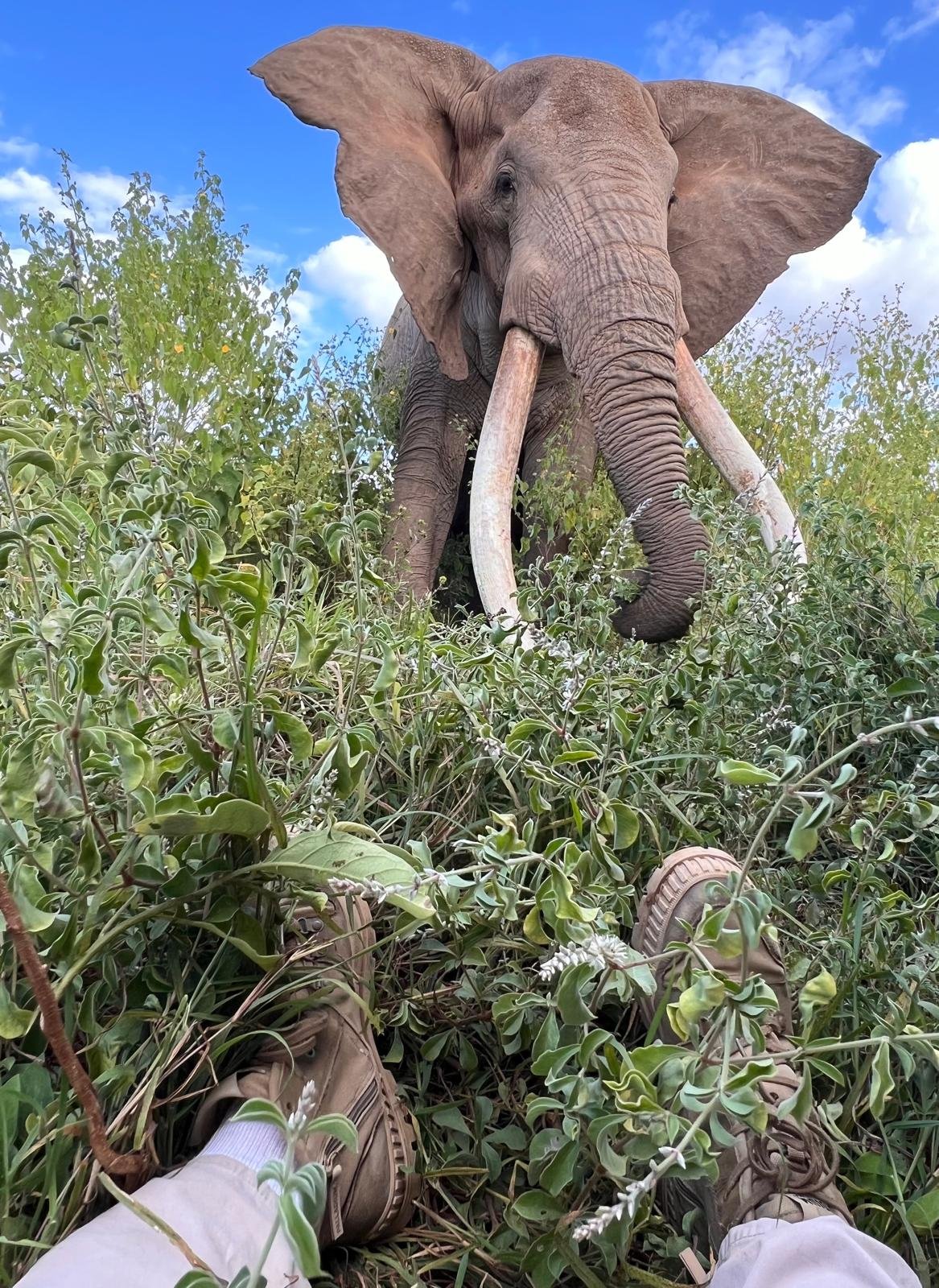
He possessed a rare combination of confidence and humility. A gentleman. A quiet king. He had seen both the beauty and brutality of Africa, yet none of it seemed to harden him. He carried the weight of history with grace.
We were able to step out of the vehicle and approach him on foot. Sometimes within ten feet. Sometimes we simply sat on the ground and watched him forage. You could feel his presence. His dignity. His ancient rhythm.
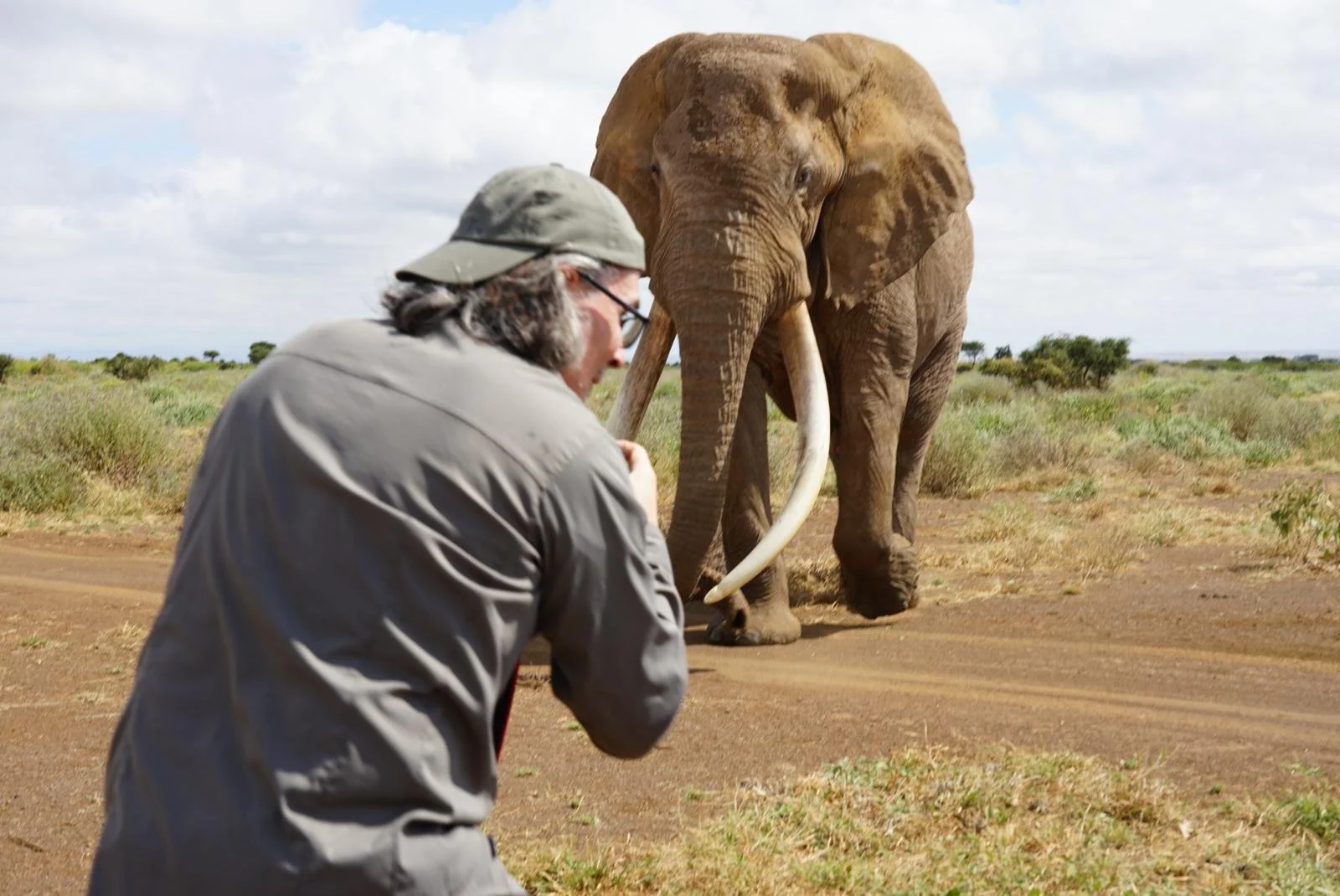
He still covered great distances, even in old age. When he decided to move, he moved with purpose. You had to stay alert. But those moments beside him, walking slowly through the bush, observing him breathe, feed, and exist, were deeply personal. I needed that intimacy to truly capture him in the new painting.
I feel incredibly fortunate to have spent that time with him just a few years ago.
With Craig’s passing, the world loses more than a magnificent animal. We lose a living bridge to a wilder past. A being who embodied patience, endurance, and quiet power. An ambassador for a species that shapes ecosystems, opens pathways, and teaches us, if we are willing to listen, how to belong rather than dominate.
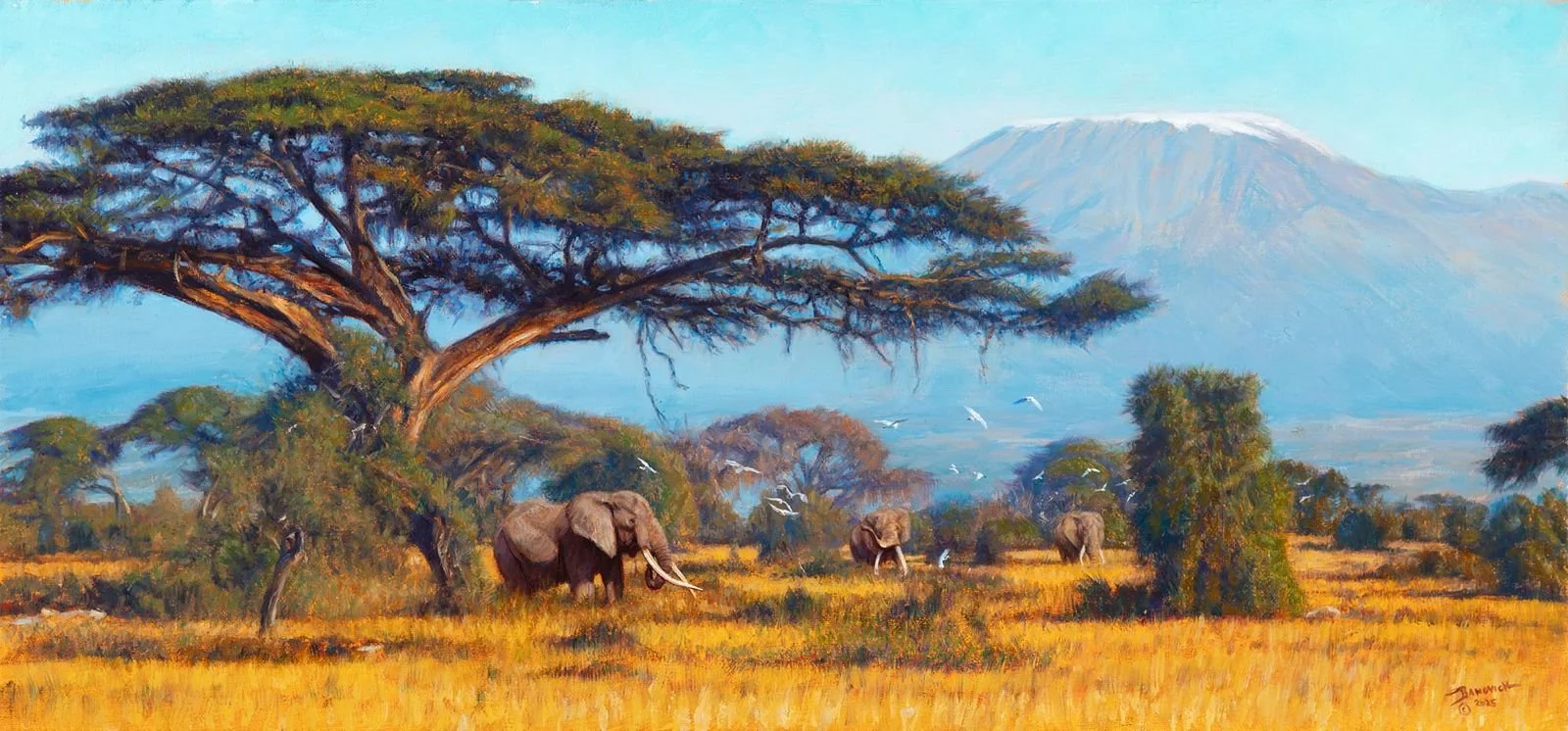
“Last of the Big Tuskers”, oil on Belgian linen by John Banovich.
To see a tusker like Craig in the wild is to feel time stretch. To stand before him is to understand scale in a new way, not just physical, but spiritual. He carried centuries in his stride. His gaze held memory. His silhouette against the slopes of Kilimanjaro felt like a scene from another age.
This is why elephants matter.
This is why Craig mattered.
Craig will always be remembered as a relic of a bygone era. No elephant in East Africa today carries tusks like his. Even so, he was still nearly fifty percent smaller than the world record tuskers. Yet in a modern age defined by relentless poaching, his 145 and 125 pound tusks were nothing short of miraculous.
He was living history.
A symbol of what once was.
And a reminder of what is at stake.
His story now lives on in photographs, in art, in the words of those who walked beside him. It lives in the hearts of travelers who witnessed him. In the rangers who guarded him. In the artists who tried to capture the weight of his presence on canvas.
And it lives in us, if we allow his legacy to stir something deeper.
Because remembrance alone is not enough.
Craig’s life asks something of us.
To protect what remains.
To support those on the front lines.
To choose reverence over consumption.
To ensure that future generations still have the chance to stand in awe before giants.
Craig will always hold a special place in my heart. I will miss his presence on the plains of East Africa. The land feels quieter without him.
He has walked his final path. But his story is not over.
It continues every time we choose to care.
Every time we tell his story.
Every time we act in service of the wild.
Craig was not just an elephant. He was a king. And kings are never forgotten.

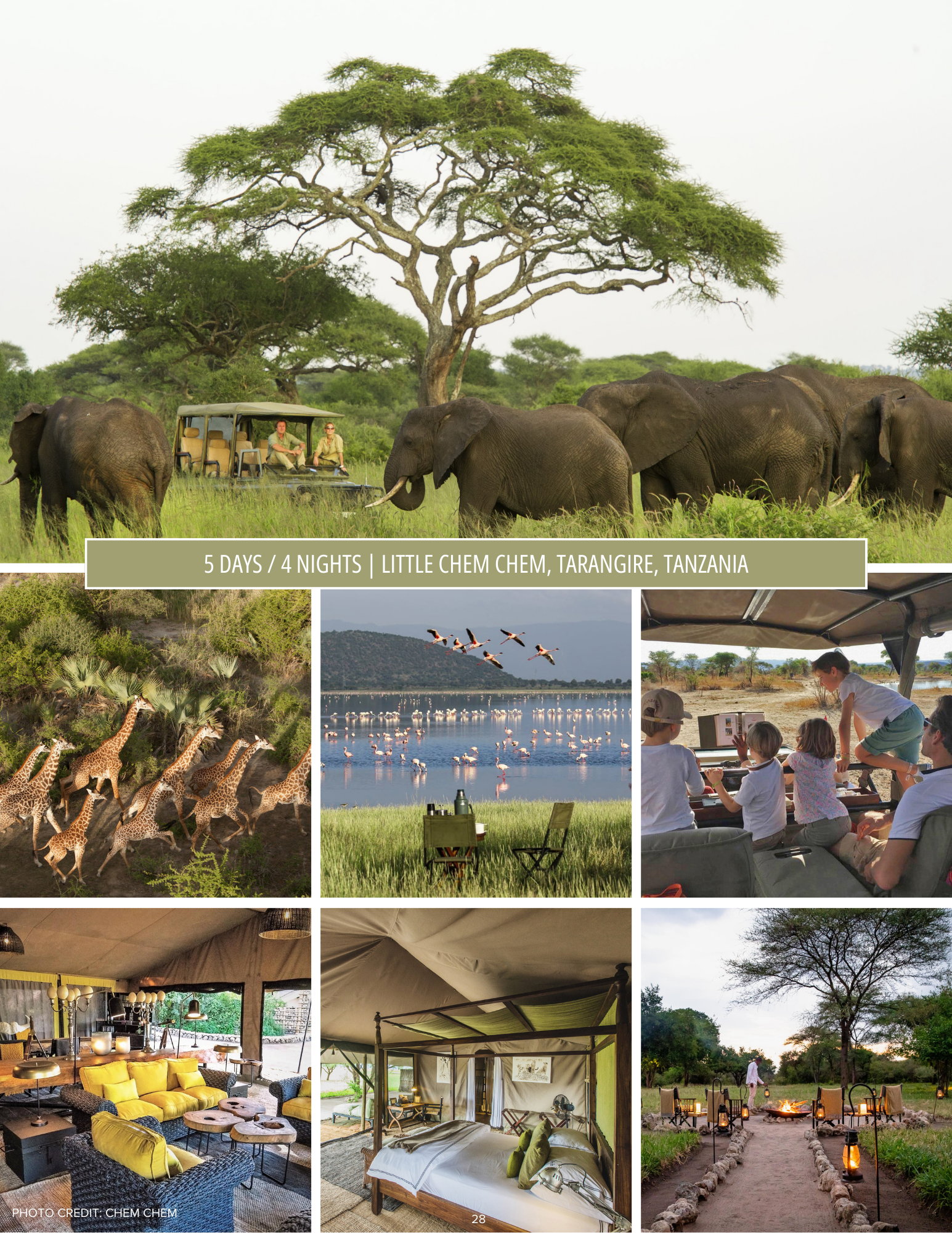
Enjoying the peaceful nature of an elephant herd on safari at Little Chem Chem in Tanzania.
Plan Your Elephant Experience And Safari
Craig (1972–2026) was one of Africa’s last great super tuskers, a male African bush elephant whose immense ivory and gentle presence made him a living symbol of conservation success in East Africa. Born in Kenya’s Amboseli National Park to the famed CB herd, Craig carried tusks weighing over 100 pounds each, long enough to brush the ground as he walked. Deeply beloved by rangers, conservationists, travelers, and the local Maasai community, he became an icon of what protection can achieve in a world shaped by poaching. Craig died peacefully of natural causes on 3 January 2026 on the lower slopes of Mount Kilimanjaro. He leaves behind a powerful legacy, a reminder of what once was, and what still must be protected.