
The Luxury of Being Here… and Why the most intimate safari stays are often planned 12–24 months ahead.
There is a particular kind of quiet that is hard to find in everyday life. It comes just before dawn, when the first light begins to lift over the bush. The air is cool. Somewhere beyond camp, a bird calls. You have nowhere else to be and nothing you need to check. For a while, the day asks nothing of you except that you notice it.
Perhaps this is part of what draws people to safari. The wildlife is extraordinary, of course. So are the landscapes and the privilege of seeing animals move freely through them. But a safari can offer something less tangible, too: space to slow down, to pay attention and to feel present again.
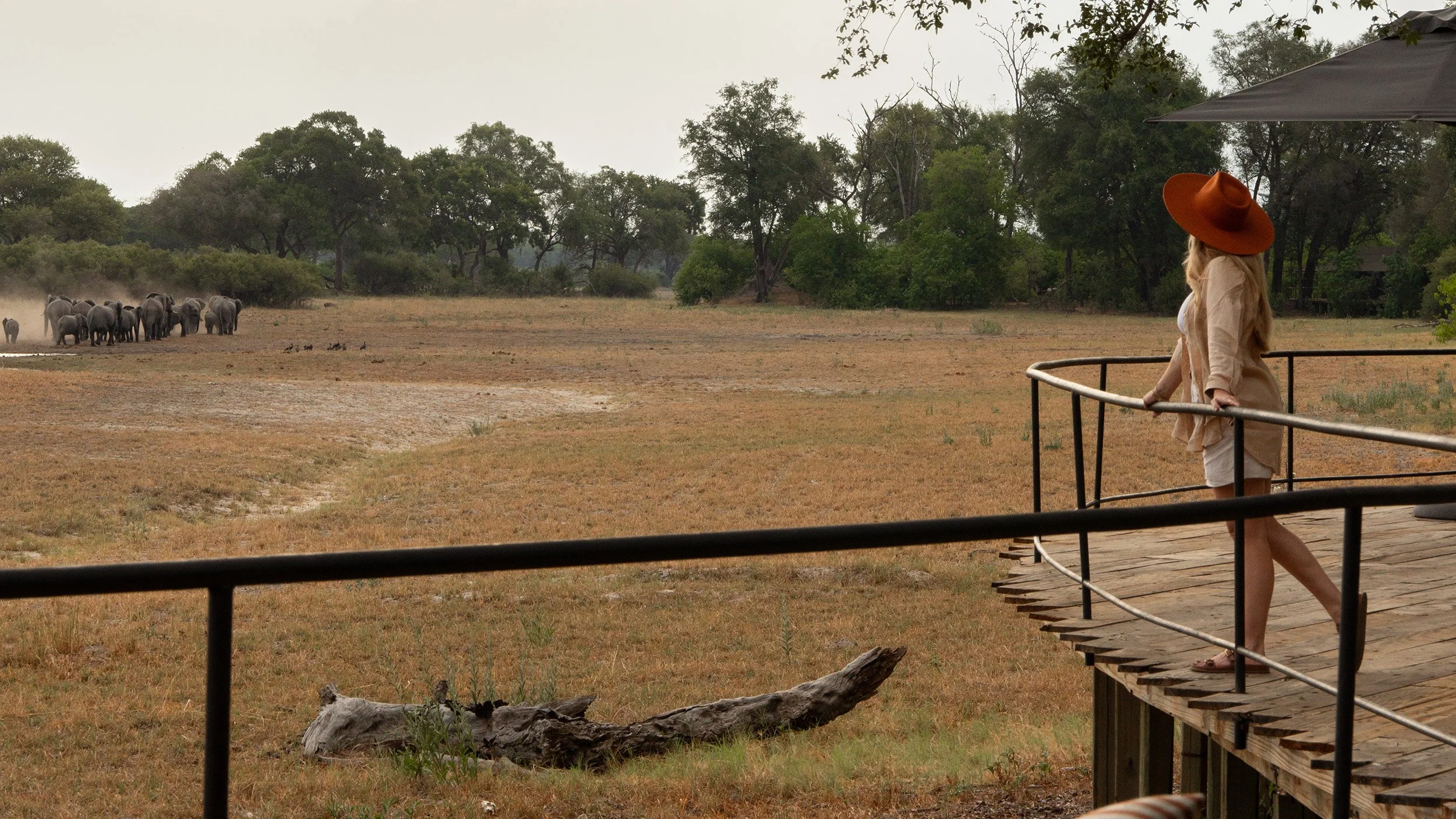
Luxury, in this setting, is not only a beautiful room or a thoughtful meal. It is the freedom to spend the morning watching elephants at a waterhole because nothing else is scheduled. It is the quiet of a private concession, the care of a guide who understands what interests you, and the pleasure of being somewhere with room to breathe.
A different rhythm
A safari day follows nature’s timetable. You might leave camp early for a game drive, return for breakfast and find that the rest of the morning is yours. There may be time for a swim, a book, a long lunch or simply sitting on your deck and watching the landscape change.
Then, as the afternoon cools, you head out again.
The simplicity can be surprisingly restorative. You begin to notice the small things: the tracks crossing a sandy road, the shift in birdsong, the way the light changes across a plain. Conversations stretch out. Children spot things adults miss. Phones are put down because, for once, there is somewhere more interesting to look.
That is not to say every moment is quiet. A safari can be full of anticipation and discovery. But there is usually less pressure to fill every hour. The space between activities becomes part of the experience.
Space and privacy matter
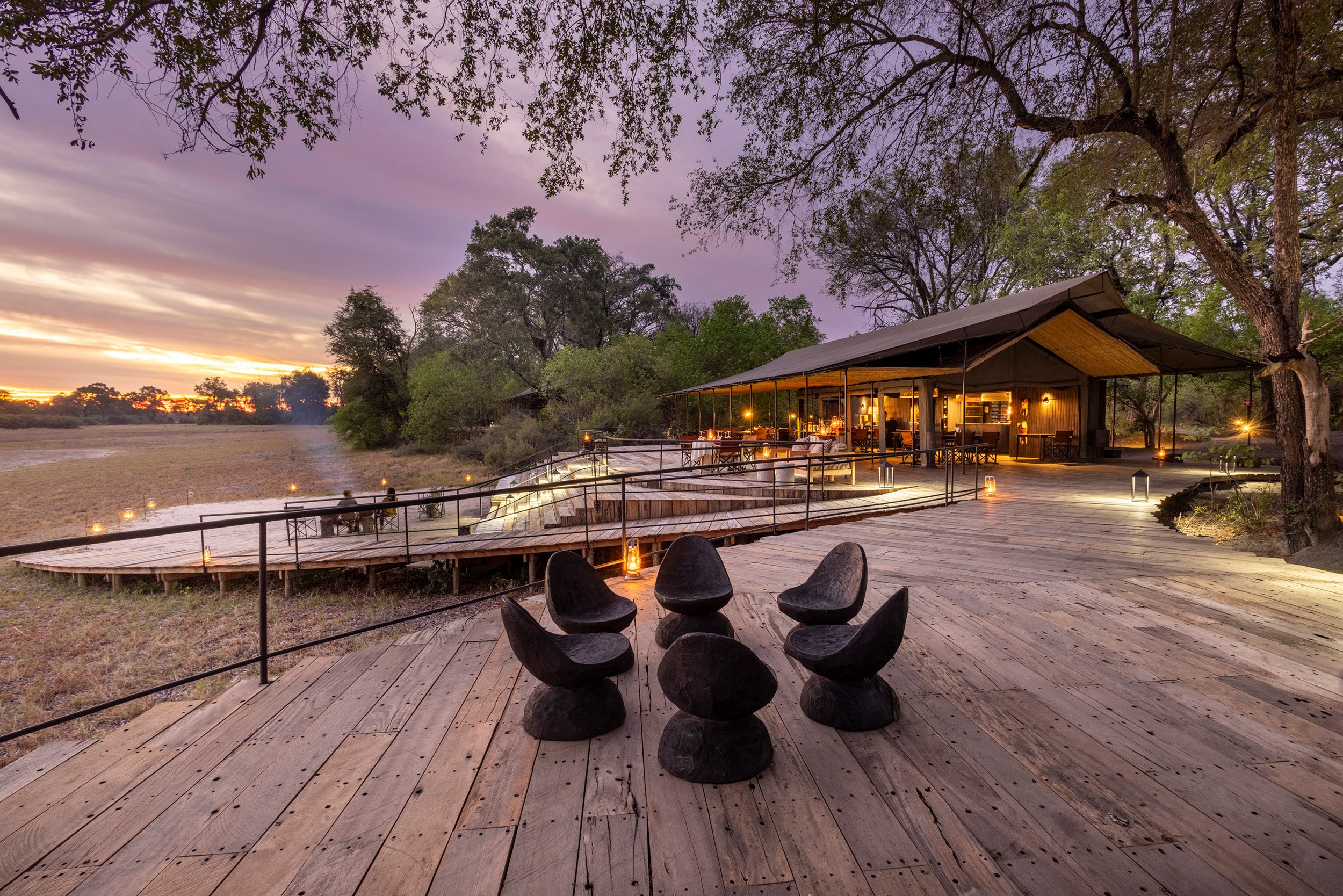
Many of the most distinctive safari experiences take place in intimate lodges and camps, often with only a small number of rooms. In private concessions, there may be a greater sense of space and privacy, as well as the chance to explore with your own guide and vehicle.
This is a different proposition from booking a room at a large city hotel. The accommodation, the people and the wildlife experience are closely connected to a particular place. A small camp may have only a handful of rooms; a lodge may be ideal for a couple but have limited space for a family or a group travelling together. That intimacy is part of the appeal. It also means that the right room combination may not be available on every date.
The journey matters as much as each stop
A memorable safari is rarely just a list of lodges. It is a journey with a natural flow: the right places in the right order, enough time in each, and the logistics arranged so that travel does not take over.
That can mean choosing whether to begin in Botswana and finish in South Africa, or to save a gorilla encounter in Rwanda for the final days. There is no single correct sequence. It depends on the season, the travellers, what they most want to experience and how they want the journey to feel.
Flights are part of that planning. Some routes work well on scheduled services; others may be smoother by charter. Sometimes an extra night in a convenient place makes the whole journey easier. And at a remote, high-value safari location, it can be worth arranging arrival so that your first day is already part of the experience: meeting your guide at the airstrip and heading out for a game drive, even if your room is not yet ready. The aim is to make the most of the time you have, especially in the places that matter most to you.
Why plan ahead?
The most sought-after camps are small, and availability can become complicated when you are travelling in peak season, need several rooms, or want to combine more than one destination. A couple may have flexibility where a family or group of eight does not. A lodge might have space on its own, while the dates that work for the rest of the itinerary are already taken.
That is why we recommend starting early. For travel during popular seasons, or for a journey involving several camps and multiple rooms, planning 12 to 24 months ahead gives you the best chance of securing the accommodation and sequence you want. We are already planning journeys for 2028 and beyond.
This does not mean every lodge is full or that every safari needs two years of preparation. Availability varies by destination, season, camp and group size. But the earlier you begin, the more room there is to shape the journey around you rather than build it around whatever remains.
Make room for the experience
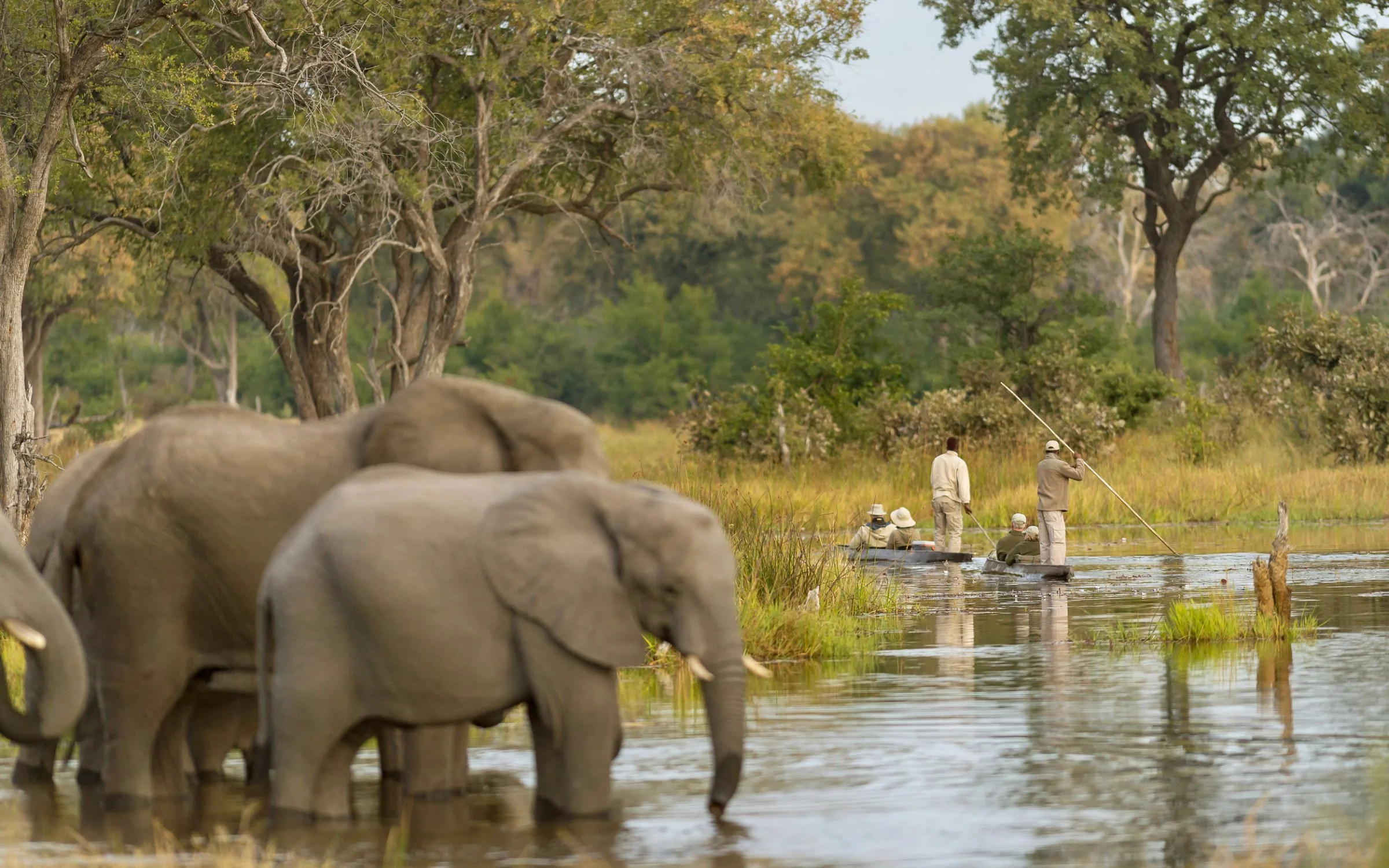
A safari may take you to Botswana’s waterways, Zimbabwe’s wild places, South Africa’s private reserves, Tanzania’s great migration or Rwanda’s mountain forests. Each destination offers something different. What they can share is the chance to step out of your usual rhythm and spend time somewhere that asks you to look, listen and be present.
The best itinerary is not necessarily the one with the most stops. It is the one that gives you time to settle into each place, to connect with the people who know it, and to let the experience unfold.
If Africa is calling, begin the conversation early. Tell us what you hope to feel, see and share. We can help you find the places that fit, and give the journey the time and care it deserves.
If you’re considering an African safari, tell us when you hope to travel, who’s coming and what you most want to experience. We’ll help you find the right places and start shaping a journey around them. For popular seasons or multi-stop itineraries, beginning 12–24 months ahead gives us more room to secure the camps and dates you want.
PHOTO CREDIT: Wildscapes Travel Partner - Kiri Camp, Machaba Safaris
