
From Field to Fine Art: The Journey of a Painting
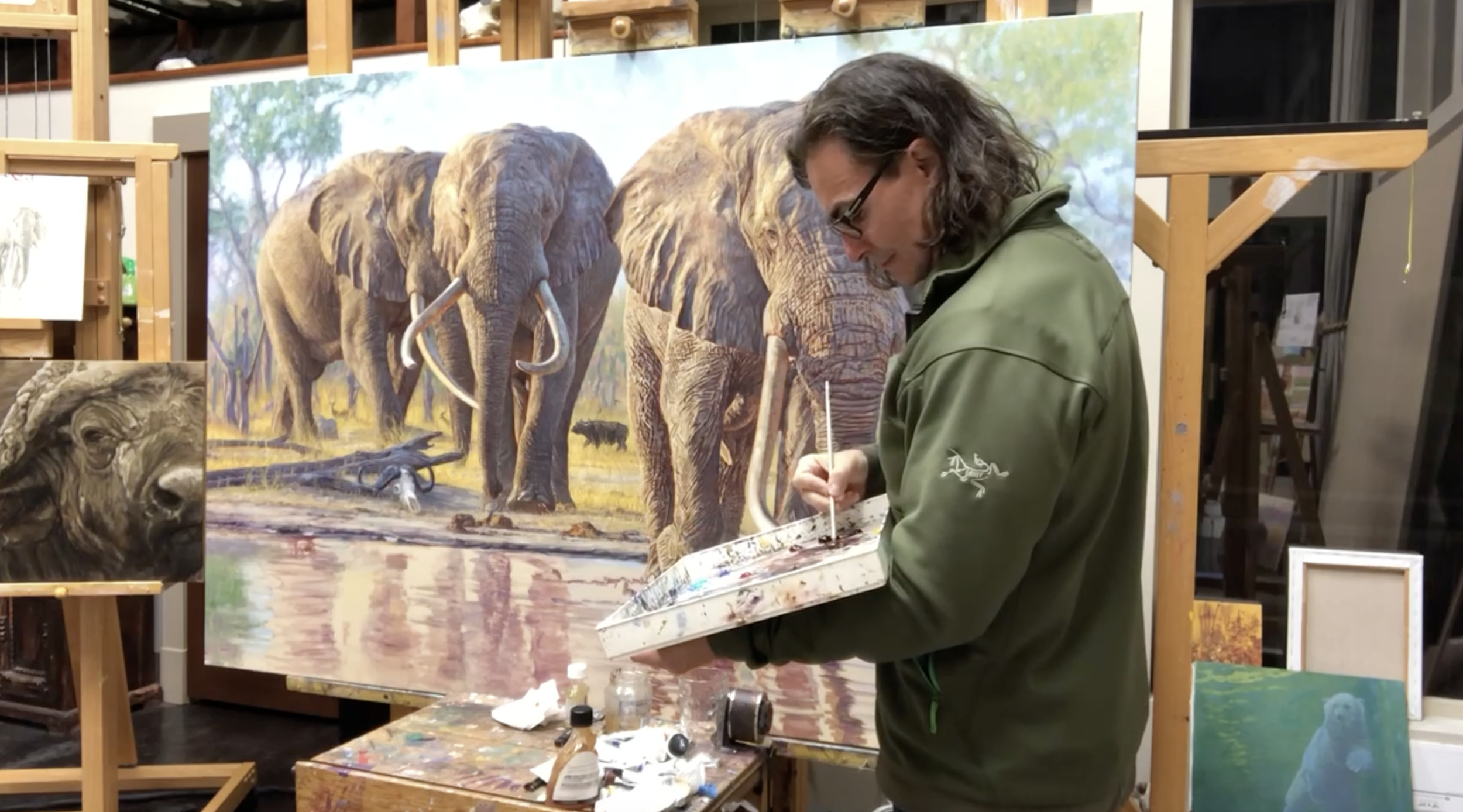
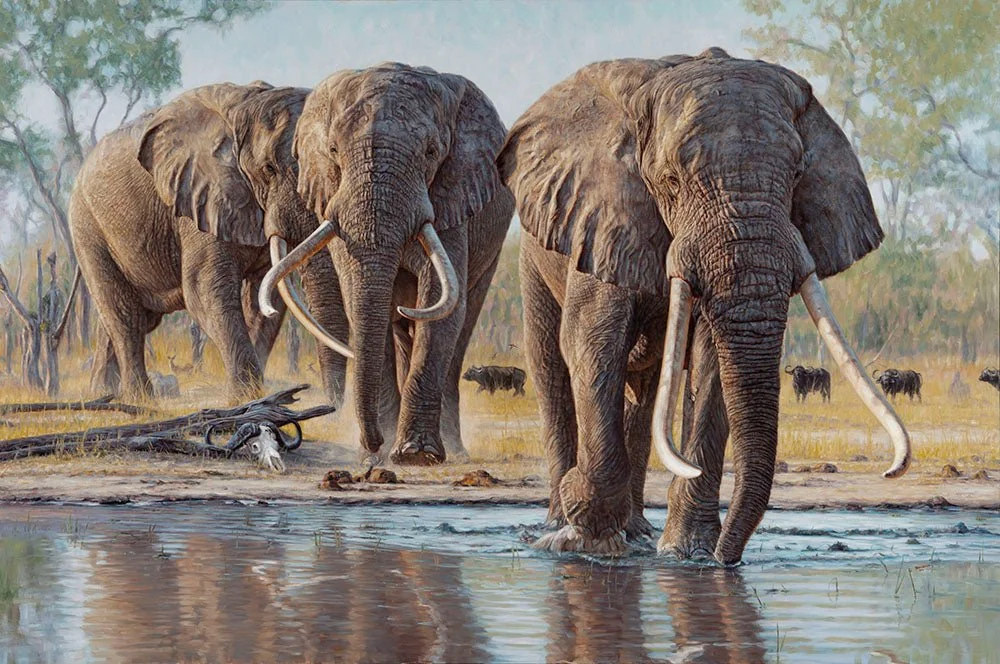
We Three Kings II in progress
Long after the dust has settled and the light has shifted, the moment remains.
You don't capture it the instant it happens. You don't fully understand it as it unfolds... You don't fully understand it as it unfolds… The crack of dry earth beneath your boots. The low rumble of elephants before dawn. Dust hanging in the air after a herd passes through. Instead, it works on you slowly - the way light fell across the savannah, the tension in a single glance between predator and prey, the impossible stillness that filled the air just before something moved.
This is where a painting begins.
Not at the easel. Not with the first stroke of a brush. But out there, in the field, where everything is felt before it is ever drawn.
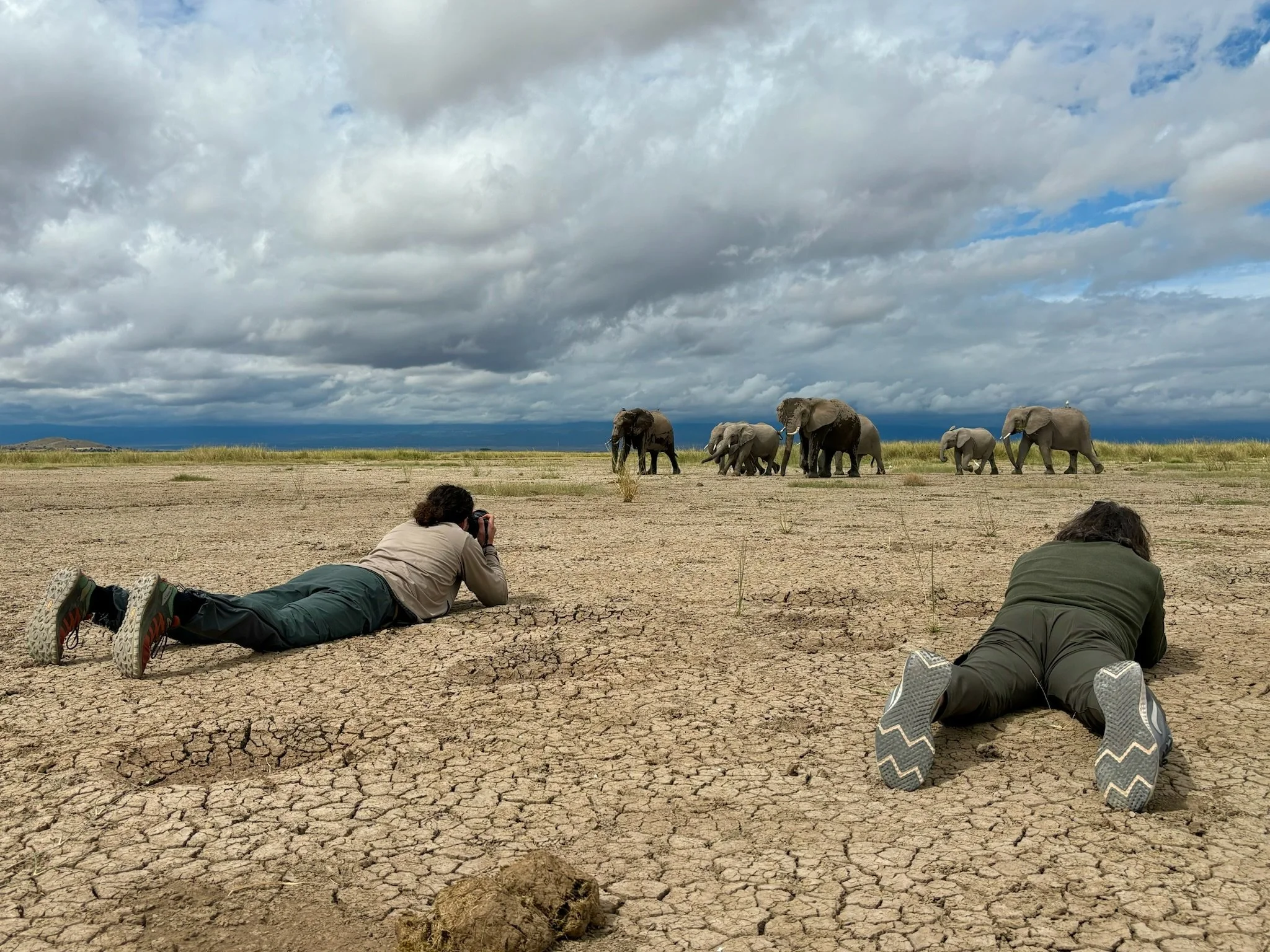
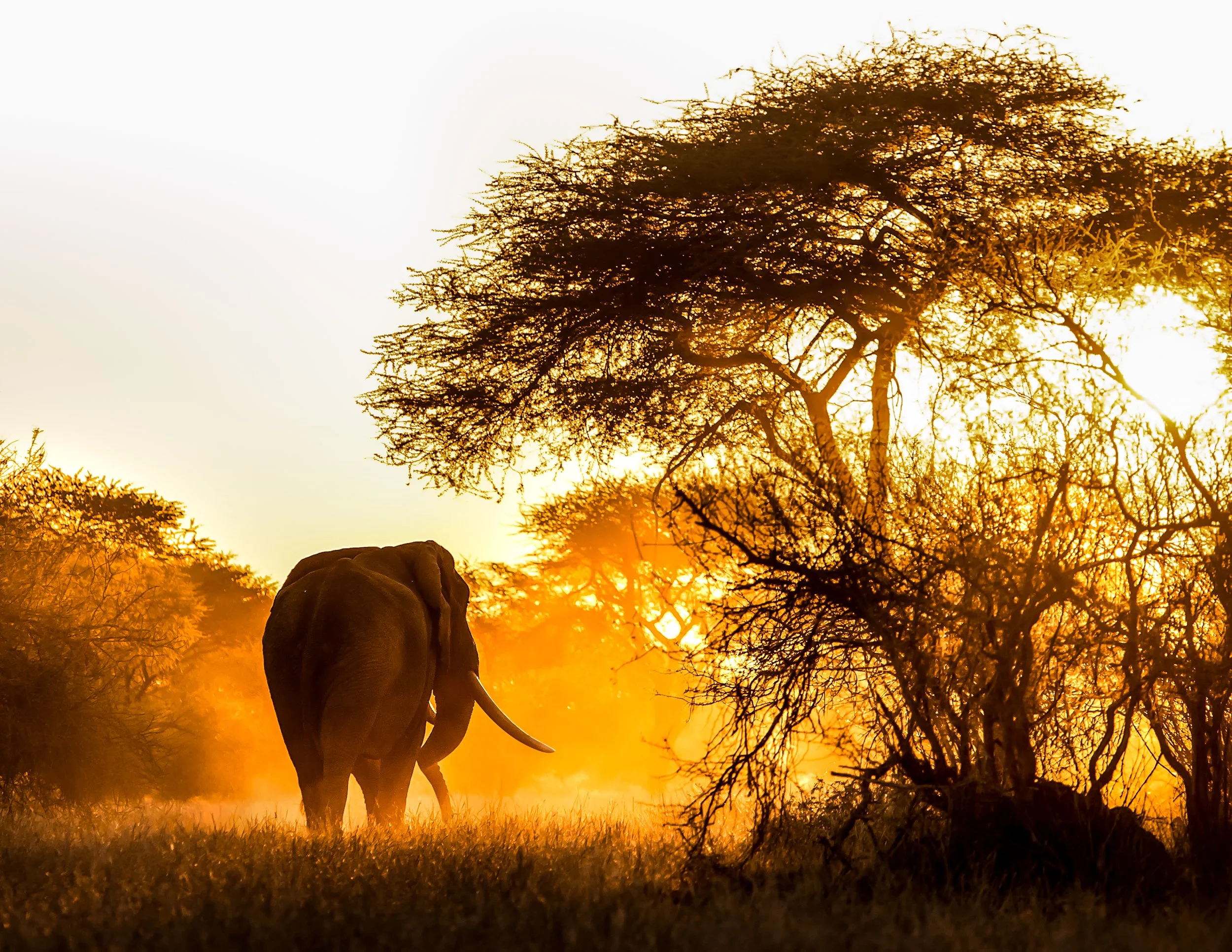
For wildlife artist John Banovich, time spent in the wild isn't research. It isn't reference-gathering. It is the foundation of the work itself. Every detail, every gesture of an animal, every shift in light is absorbed long before it is translated into form. He sketches, of course - quick studies, scribbled notes, fragments of what he saw. But those pages are not the painting. They are reminders. Because what ultimately shapes the canvas isn't the accuracy of detail. It's the memory of the moment.
Back in the studio, the work begins to take shape - but not as a replication. As a translation. The feeling of being there. The stillness. The wild energy that no camera can quite hold, that only the human heart can carry home.
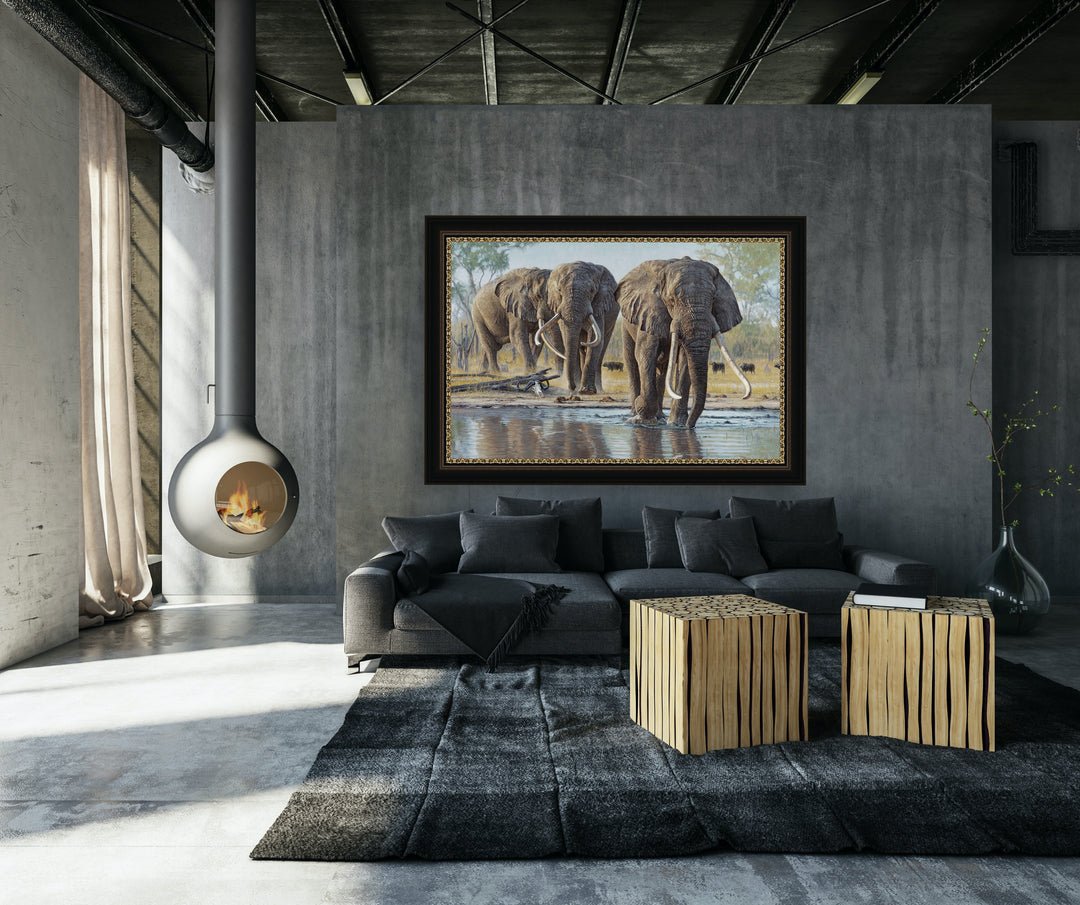
This is why the field matters.
Without it, something is missing. The depth. The authenticity. The connection. These are not qualities that can be added later, layered on top of a technically perfect composition. They have to be lived first. Traveling alongside artists, guides, conservationists, and people deeply connected to these landscapes changes the way you experience Africa. You begin to slow down. To observe differently. To understand that the wilderness is not simply something to see, but something to feel.
For travellers who step into these same landscapes, the process becomes visible in a different way. You begin to notice what is worth noticing. What lingers. What stays with you long after the trip ends. And slowly, you start to see differently - not just what is in front of you, but what it means.
This is the space where art and travel meet. Not in the outcome, but in the experience itself. A great painting and a great journey share the same origin: a moment lived fully, observed with care, and carried home as something that changes the way you see the world.
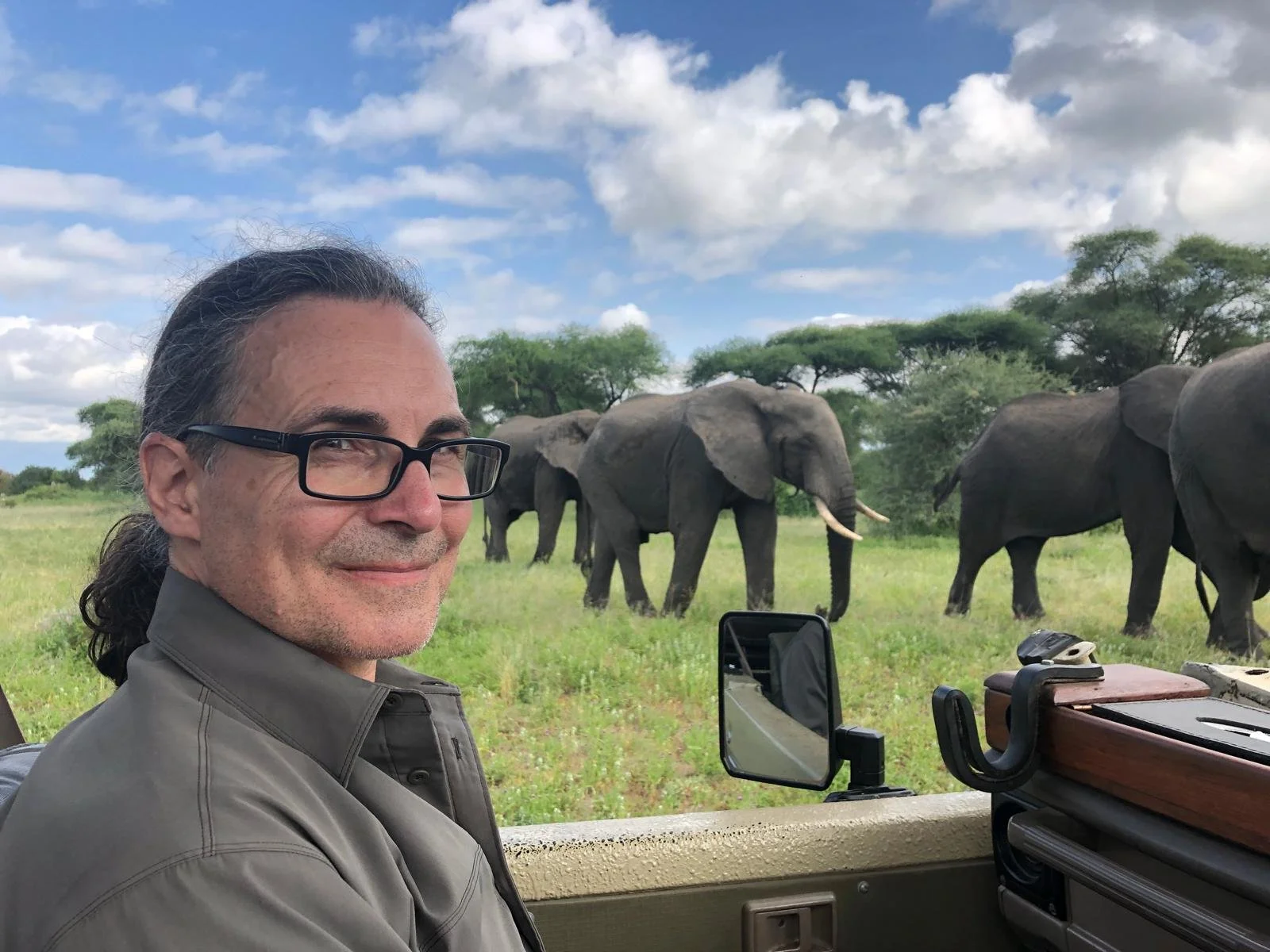
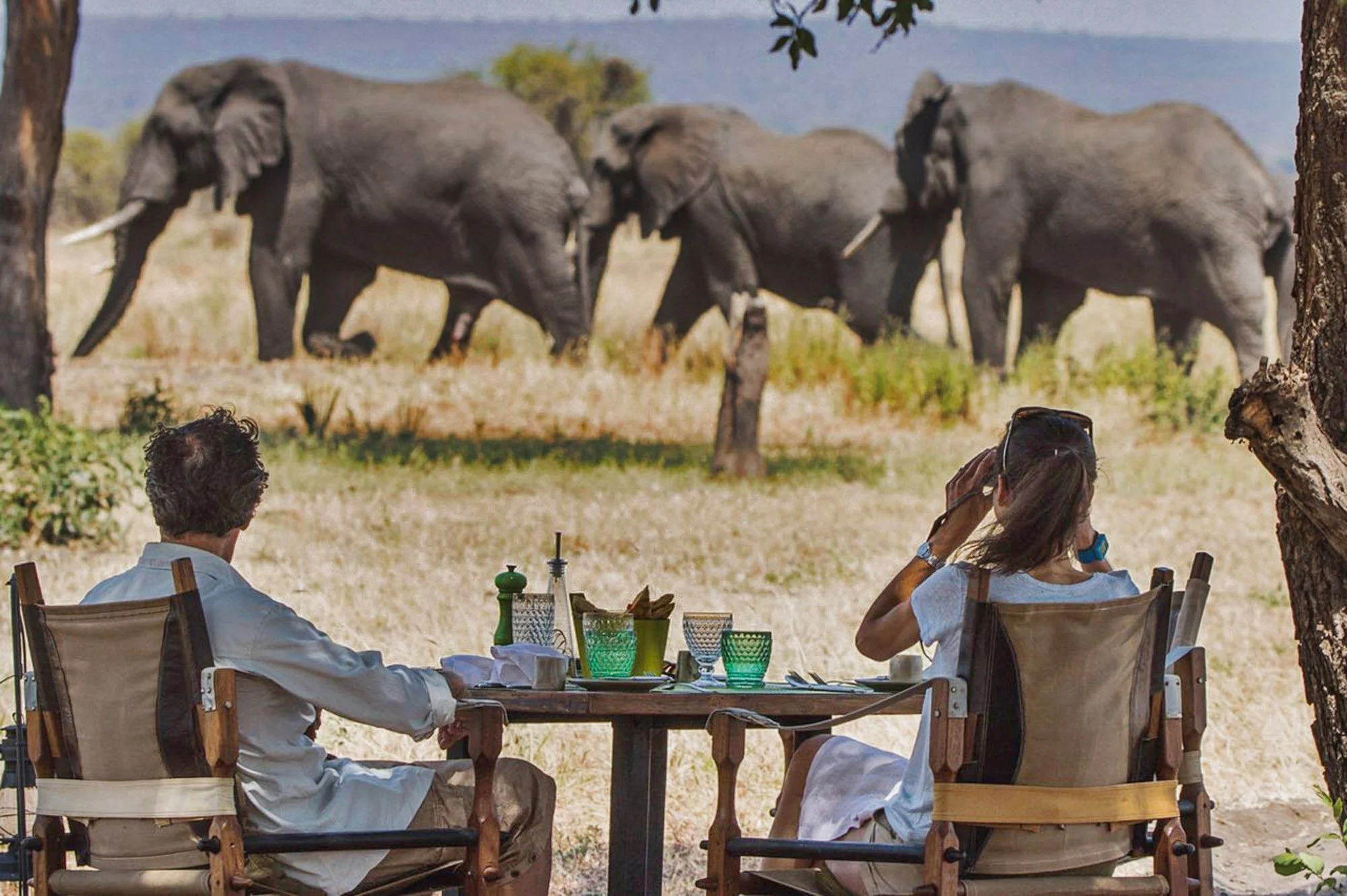
At Wildscapes Travel, we design journeys with that in mind. Curated with intention. Shaped by experience. Grounded in a deep connection to Africa's wild places.
If something in this is calling to you, we would love to begin crafting it with you.
